Short Version
Both are thought to act on AMPK, and both lower glucose markers in trials. There the similarity stops. Metformin has decades of hard outcome data, a known dose and pharmacy-grade manufacturing. Berberine has marker data, wide dose variation between products, and no outcome trials at all. Nobody should swap one for the other.
Where The Comparison Comes From
It is not invented. Berberine and metformin do appear to share a mechanism: both activate AMP-activated protein kinase, a cellular energy sensor that increases glucose uptake and reduces the liver’s glucose output.
Several head-to-head trials, mostly from Chinese research groups, compared berberine against metformin and reported broadly similar reductions in fasting glucose and HbA1c. Those trials are real and they are the source of the whole claim.
So the comparison has a factual root. What has happened since is that the root has been stretched into something the evidence does not carry.
Four Places The Comparison Collapses
1. Markers are not outcomes
This is the biggest one. Metformin has been studied for decades in trials measuring what actually happens to people — heart attacks, kidney disease, deaths. Berberine trials measure blood markers over weeks or months.
Lowering a number and improving a life are related, and they are not the same claim. The history of medicine contains several drugs that improved a marker and made outcomes worse.
2. The dose in a blend is not the dose in a trial
Berberine trials use 900 to 1,500 mg a day, split across two or three doses because it clears fast. A multi-ingredient capsule cannot deliver that, which the arithmetic article works through.
3. Manufacturing consistency
Metformin is a pharmaceutical made to a defined standard. Berberine content varies between supplement brands, and independent testing of botanical supplements has repeatedly found products off their label claims.
4. Interactions are underestimated
Berberine inhibits several CYP enzymes and P-glycoprotein, which is how a great many drugs are cleared. It raises cyclosporine levels measurably. Metformin is comparatively clean on this front, which is the opposite of what most people assume about a natural product.
The part that genuinely matters. People are stopping metformin to take berberine, on the strength of the nickname. That is a decision with real consequences and there is no evidence base supporting it. If you take metformin, the conversation about adding or replacing anything belongs with the doctor who prescribed it.
What Berberine Genuinely Has Going For It
This article is not an argument against berberine, and it would be unbalanced to leave it there.
- The trial base is real. Multiple randomised studies and several meta-analyses report meaningful reductions in fasting glucose and HbA1c at proper doses.
- The lipid data is a bonus. Reductions in LDL and triglycerides appear across several trials.
- The mechanism is characterised. AMPK activation is not a vague hand-wave; it is a described pathway.
- It is cheap as a standalone. A single-ingredient berberine product declares its amount, which a blend does not.
Berberine covers all of this in more detail, including the gut microbiome angle.
What To Do With All That
Three honest positions, depending on where you are.
On metformin: do not stop it, do not reduce it, and raise berberine with your prescriber before adding it. The interaction list is the reason, not the nickname.
Not on medication, curious about berberine: a standalone product at 500 mg three times daily is what the trials used. Expect digestive upset for the first fortnight, take it with food, and know that no outcome data exists.
Considering a blend containing berberine: buy it for what it actually is, which is a broad botanical with a token amount of a well-studied ingredient. The formula page is honest about that.
Questions On This Article
What readers ask after reading it.
Is berberine as good as metformin?
No. Metformin has decades of outcome data, a defined dose and pharmaceutical manufacturing. Berberine has marker data over weeks, variable product content and no outcome trials.
Can I take berberine instead of metformin?
That is a decision for the doctor who prescribed the metformin, and there is no evidence base supporting a swap. Berberine also interacts with several drug-clearing enzymes.
How much berberine do the trials use?
900 to 1,500 mg a day, usually split into two or three doses because it clears quickly and a single large dose is hard on the stomach.
Why does berberine cause diarrhoea?
It acts partly on the gut microbiome and it is a strong alkaloid. Digestive upset is the commonest reason people abandon it, and food helps.
Does berberine interact with medication?
Yes, more than most people expect. It inhibits several CYP enzymes and P-glycoprotein, and it measurably raises cyclosporine levels.
Three More Articles
Ingredients Named Above
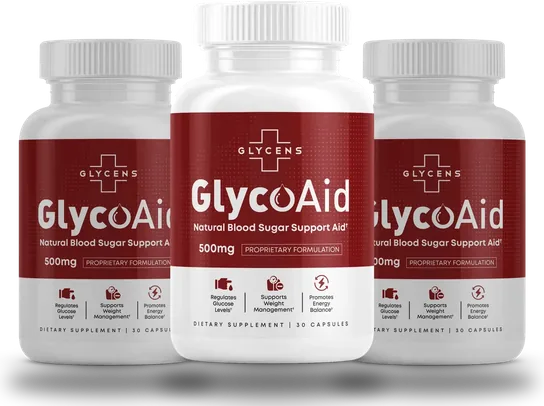
Order Your GlycoAid Today
One capsule with a meal, a page for every name on the label, and sixty days to send it back if it does nothing.
- One capsule a day, taken with food
- Fourteen names, every one with its own page here
- Free US delivery on the 3 and 6 bottle packs
- Sixty days to send it back, opened bottles included