Short Version
A fasting reading consistently above 100 mg/dL, or an HbA1c at 5.7 per cent or higher, is a reason to see a doctor rather than to buy anything. Excessive thirst, frequent urination, unexplained weight loss or blurred vision together mean an appointment this week.
The Numbers Worth Acting On
These are the commonly used US thresholds. A single result is not a diagnosis — these tests are normally repeated — but any of them is a reason to make an appointment.
| Test | Normal | Worth a conversation | See someone |
|---|---|---|---|
| Fasting glucose | Under 100 mg/dL | 100–125 mg/dL | 126 mg/dL or above |
| HbA1c | Under 5.7% | 5.7–6.4% | 6.5% or above |
| Two hours after a meal | Under 140 mg/dL | 140–199 mg/dL | 200 mg/dL or above |
| Random reading with symptoms | — | — | 200 mg/dL or above |
The middle column is the prediabetes range, and it is where a great many people first meet this subject. It is also where the news is genuinely good, because it is the stage at which changes make the most difference.
Symptoms That Mean This Week
Numbers are one route in. Symptoms are the other, and several of these get dismissed for months.
- Passing urine far more often, especially at night. Glucose in the urine pulls water with it.
- Thirst that drinking does not settle. The other half of the same mechanism.
- Unexplained weight loss. Losing weight without trying is a symptom rather than a success.
- Blurred vision that comes and goes. Fluid shifts in the lens.
- Cuts or infections that heal slowly. Particularly on the feet.
- Tingling or numbness in hands or feet. This one has already gone further than the others.
- Persistent exhaustion. The least specific and the most commonly ignored.
Several of those together is not a wait-and-see situation. Thirst plus frequent urination plus unexplained weight loss is a recognised pattern and it means an appointment now rather than at your convenience. If you are also vomiting, breathing heavily, or confused, that is an emergency department rather than a GP.
What Actually Happens At The Appointment
People delay partly because they do not know what they are walking into. It is less than most expect.
- A conversation. Symptoms, family history, what you eat, how you sleep, what medication you take. Bring the supplement bottle — it matters, especially because of the biotin in it.
- A blood test. Usually fasting glucose and HbA1c together. A single blood draw.
- Possibly a repeat. Diagnosis normally needs two abnormal results, so one raised reading is often followed by another test rather than by a prescription.
- A plan. In the prediabetes range this is usually about eating, movement and weight rather than medication. Structured programmes exist and they work.
Why Finding It Early Is The Good Outcome
This is the part worth being clear about, because a raised reading feels like bad news and it is mostly the opposite.
Prediabetes is the stage where the trajectory is most changeable. Large structured programmes have shown that eating and activity changes substantially reduce progression to type 2 diabetes, and in several trials they outperformed medication.
A number that sends you to a clinic three years earlier than you would otherwise have gone is a number that did its job. That is the entire argument for measuring anything.
Where A Supplement Sits In This
Behind all of it, and this page is on a site with order buttons so it is worth saying plainly.
Nothing on this ingredient panel is a treatment. If your readings are in the ranges above, a capsule is not the response — a clinic is. Taking a supplement instead of making an appointment is the single most harmful thing anybody does with a product like this.
If you have already seen a doctor, and your numbers are normal, and you want something alongside eating changes, that is a different situation and a reasonable one. Banaba Leaf and Chromium are the two names on this label with any claim to be doing something at this dose, and both pages are honest about the size of it.
Bring the bottle to the appointment either way. Six of the fourteen names interact with glucose medication, which the safety page sets out in full.
If You Have No Doctor
- Community pharmacies in many areas run point-of-care glucose and A1c testing.
- Federally qualified health centres in the US charge on a sliding scale.
- Many workplace health schemes include screening people never use.
- A home meter and a fortnight of consistent readings is enough to know whether you need to find one of the above.
Questions On This Article
What readers ask after reading it.
What fasting glucose level should worry me?
Consistently between 100 and 125 mg/dL is the prediabetes range and a reason to see a doctor. 126 mg/dL or above on repeated testing is the diabetes threshold.
What are the early symptoms?
Frequent urination especially at night, thirst that drinking does not settle, unexplained weight loss, blurred vision, slow-healing cuts and persistent exhaustion.
Is prediabetes reversible?
The trajectory is highly changeable at that stage. Large structured programmes of eating and activity change have substantially reduced progression to type 2 diabetes.
Should I take a supplement while I wait for an appointment?
Bring the bottle to the appointment and let the doctor decide. Do not use a supplement as a reason to postpone the appointment — that is the harmful version.
Do I need to tell my doctor about supplements?
Yes, and bring the bottle. Six of the fourteen names here interact with glucose medication, and the biotin can distort several common blood tests.
Three More Articles
Ingredients Named Above
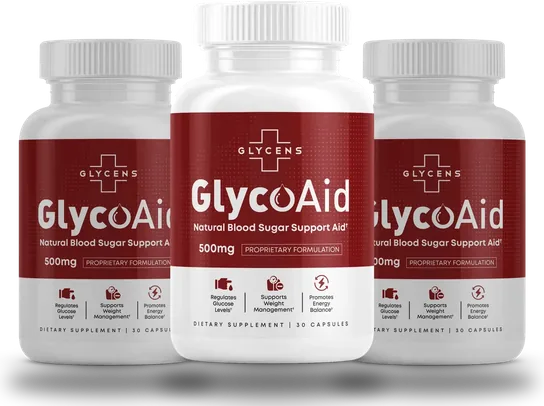
Order Your GlycoAid Today
One capsule with a meal, a page for every name on the label, and sixty days to send it back if it does nothing.
- One capsule a day, taken with food
- Fourteen names, every one with its own page here
- Free US delivery on the 3 and 6 bottle packs
- Sixty days to send it back, opened bottles included